Singapore's relationship with Thai food is older and more layered than most diners appreciate. The Thai-Singaporean community, historically concentrated in Tanjong Pagar and the southern districts, has sustained a strand of genuinely traditional Thai cooking on the island for decades. That foundation: combined with Singapore's proximity to Bangkok, the availability of fresh Thai produce through Johor Bahru markets, and a restaurant market that forces operators to earn their keep every service: has produced a Thai food scene that stands well above what most comparable cities outside Thailand can offer. We ate across more than 30 Thai restaurants over six months, from hawker-adjacent casual chains to hotel rooftops and celebrity-chef fine dining rooms, ranking each on authenticity to Thai culinary tradition, spice calibration (accuracy and control rather than raw heat), ingredient freshness, menu depth, and value relative to the price charged. What follows is the definitive ranking of Thai food in Singapore for 2026.
Key Takeaways
- Best overall: Nara Thai Cuisine at ION Orchard, 4.3 stars on Google, the most accomplished upscale Thai in Singapore with a green curry and mango sticky rice that benchmark the field
- Best fine dining: Patara Fine Thai Cuisine at Tanglin Mall, the standard-bearer for formal Thai dining and the go-to for business entertaining in Singapore
- Best rooftop: Blue Jasmine at Park Hotel Farrer Park, the only Thai restaurant in Singapore with a genuine outdoor rooftop terrace and a menu that matches the setting
- Best celebrity chef: Long Chim at Marina Bay Sands, David Thompson's acclaimed Thai restaurant brings research-grade ingredient sourcing and historical recipe fidelity to the island
- Best heritage: Thanying, operating since 1987, the longest-standing Thai restaurant in Singapore and the most reliable custodian of royal Thai cuisine traditions
- A typical Thai meal in Singapore costs SGD 15–28 per person at casual restaurants; fine dining at Patara or Nara runs SGD 40–70 per person with drinks
- Spice levels at most Singapore Thai restaurants are calibrated to local preferences, which run milder than Bangkok: request "Thai spicy" explicitly if you want the full heat spectrum
⭐ Top Pick
Nara Thai Cuisine
Pros
- ✓The green curry at Nara Thai is made with house-ground curry paste using fresh galangal, kaffir lime leaf, and lemongrass: the aromatic depth is immediately distinguishable from restaurants using commercial paste blends, and the coconut milk is properly split to show a thin layer of oil on the surface
- ✓Mango sticky rice arrives with ripe, fragrant Ataulfo-variety mango and freshly cooked glutinous rice dressed with warm coconut cream: the texture calibration between sticky rice and ripe fruit is precisely right and not something every Thai restaurant in Singapore achieves
- ✓The ION Orchard and other Nara outlets maintain consistent kitchen execution across lunch and dinner service, which multi-outlet Thai restaurant groups rarely manage without compromising on fresh ingredient quality
- ✓4.3 stars on Google across multiple outlets, with particular consistency noted for the tom kha gai and the stir-fried holy basil dishes that test a kitchen's ability to execute high-heat wok cooking correctly
Cons
- ✗Upscale positioning and Orchard Road address means the per-person bill at Nara is higher than at equally good but less prominent Thai restaurants: the food quality justifies the premium but casual diners on a budget have better value options lower on this list
- ✗Weekend dinner demand at ION Orchard is high and reservations are strongly recommended: walk-ins on Friday and Saturday evenings frequently face 30–45 minute waits
How We Ranked These Thai Restaurants
We evaluated every restaurant across five criteria: authenticity to Thai culinary tradition (judged by paste preparation method, ingredient sourcing, and fidelity to regional dish standards), spice calibration and control (the ability to deliver genuine Thai heat profiles accurately across the menu rather than blanket-diluting everything for local taste), ingredient freshness with particular attention to fresh herbs, galangal, lemongrass, and kaffir lime leaf versus dried or powdered substitutes, menu range and depth across appetisers, soups, curries, stir-fries, and desserts, and value for money relative to the price tier. Google ratings provided a consistency cross-check, with a minimum threshold of 4.0 stars required for inclusion. Restaurants operating primarily on tourist visibility rather than kitchen quality, and restaurants where fresh herb substitution was systematic, were excluded regardless of brand profile.
Our Top Picks
1. Nara Thai Cuisine: The Benchmark for Thai in Singapore
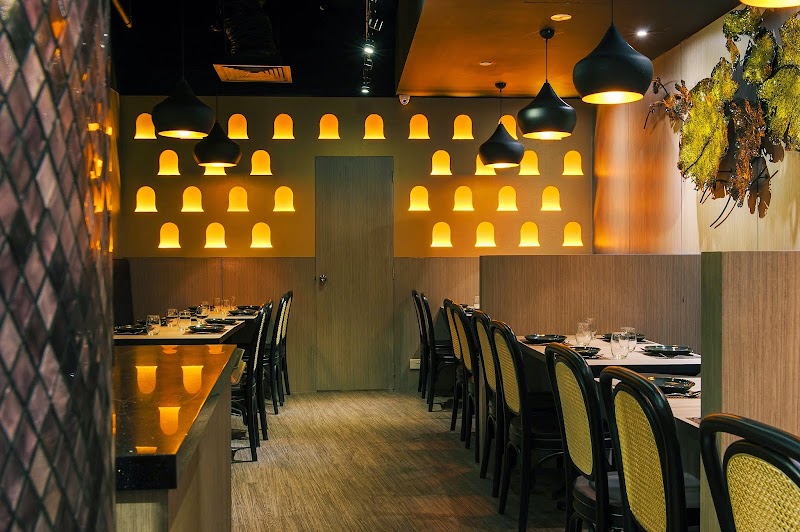
Nara Thai Cuisine, originating from Bangkok and operating multiple outlets in Singapore including ION Orchard and Great World, holds the top position on this list on the strength of its kitchen technique: specifically its commitment to house-made curry pastes and fresh-ingredient preparation that separates it from every other multi-outlet Thai restaurant operating in Singapore. The green curry (gaeng keow wan) at Nara is the clearest proof: the paste is ground fresh with galangal, green chillies, lemongrass, kaffir lime zest, shallots, and coriander root, producing a curry base with an aromatic brightness that commercial paste blends cannot replicate regardless of quality. The coconut milk is properly rendered: the fat separated on the surface in the traditional manner: rather than the uniform, sauce-like consistency that marks a rush job. The mango sticky rice is the best version available at a restaurant of this tier in Singapore: ripe, fragrant mango alongside fresh-cooked glutinous rice dressed with warm coconut cream and a scattering of toasted sesame. At 4.3 stars on Google, the Nara kitchen consistently delivers across a broad menu that includes tom yum, larb, som tam, massaman, and an extensive grilled section.
📍 Address: 2 Orchard Turn, #04-07 ION Orchard, Singapore 238801
🌐 Website: narathai.com.sg
"Nara is the restaurant I take visiting friends to when I want to show them what Thai food in Singapore can be at its best. The green curry is genuinely the best I have eaten outside Bangkok: the paste is made with fresh herbs, you can smell it the moment the bowl arrives. The mango sticky rice alone is worth the trip.", Clarissa Wong ★★★★★
2. Patara Fine Thai Cuisine: The Standard for Business Dining
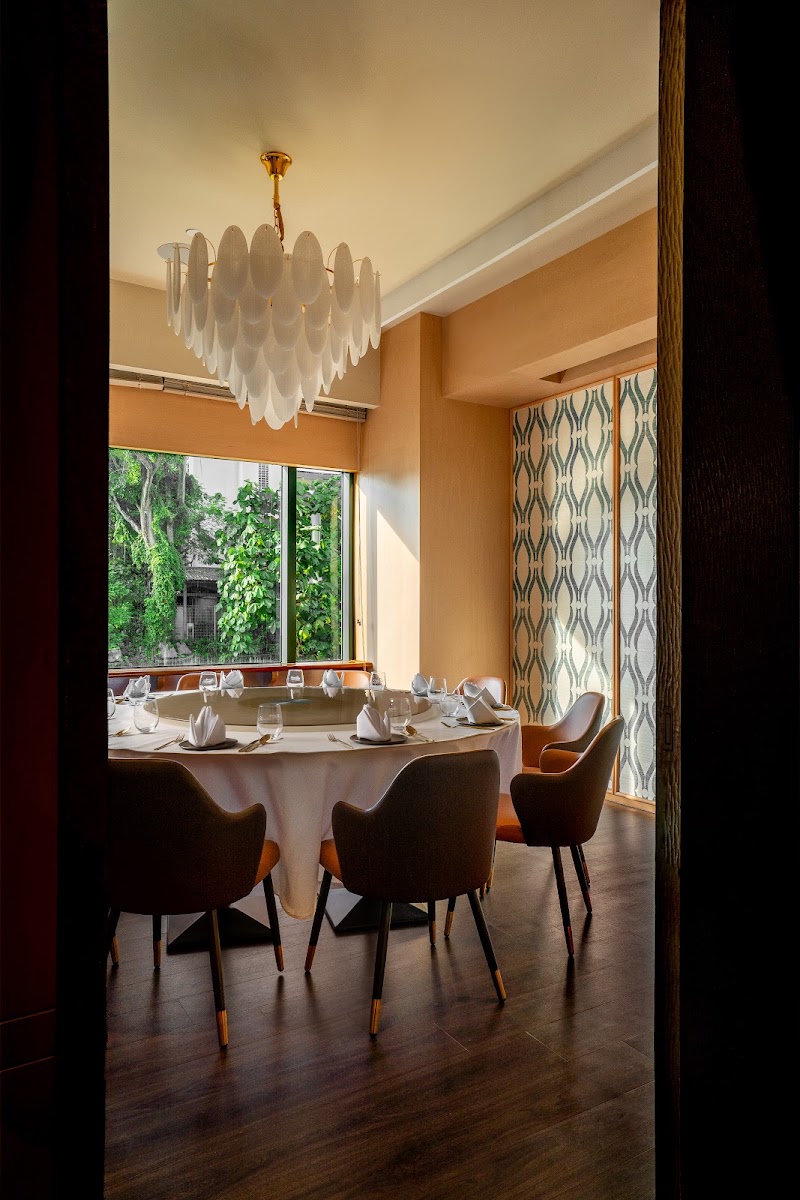
Patara Fine Thai Cuisine at Tanglin Mall has occupied the top tier of Singapore's formal Thai dining scene for years, earning a 4.2-star Google rating through consistent delivery of royal Thai cuisine in an environment designed for business entertaining and celebration dining. The Patara kitchen operates with a formality that distinguishes it from casual Thai operators: portion sizes are precise, plating is considered, and the flavour calibration across the menu reflects a kitchen that has been trained in the palace tradition of Thai cooking where balance: between sweet, sour, salty, and heat: is treated as a technical standard rather than a matter of taste. The massaman curry is the definitive dish: a slow-braised beef or lamb massaman enriched with toasted whole spices, roasted peanuts, and a coconut milk base that carries the complexity of a braise that cannot be rushed. The tom yum soup is made with fresh lemongrass, galangal, and kaffir lime leaf in a clear broth rather than a cream variant: a traditional presentation that Patara has maintained while others have simplified. For business lunches, celebration dinners, and client hospitality where a Thai restaurant is the setting of choice, Patara at Tanglin Mall is the first and most reliable recommendation.
📍 Address: 163 Tanglin Rd, #03-14 Tanglin Mall, Singapore 247933
🌐 Website: patara.com.sg
"Patara has been my go-to for client Thai dinners for five years and it has never once let me down. The massaman here is the best in Singapore: the beef is perfectly tender, the spice balance is exactly right, and the service is professional without being stiff. This is what a fine dining Thai restaurant should be.", Richard Ng ★★★★★
3. Long Chim: David Thompson's Research-Grade Thai
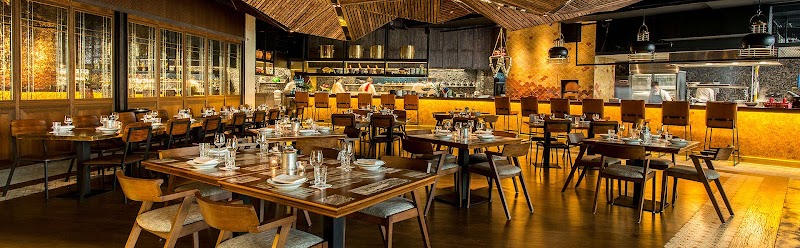
Long Chim at Marina Bay Sands is the Singapore outpost of David Thompson's acclaimed Thai restaurant concept, built on Thompson's decades of research into Thai culinary history and his reputation as the most scholarship-driven non-Thai chef working in the Thai tradition. The Long Chim menu draws on historical Thai recipes, regional specialities, and street food dishes that most Singapore Thai restaurants have never served: the nahm prik (chilli dips with accompanying vegetables and crackers) and the grilled meats alongside fresh herb accompaniments reflect a version of Thai eating that is closer to how food is consumed in Thailand than the curry-and-stir-fry shorthand that dominates most Thai restaurant menus globally. At 4.2 stars on Google, the MBS location situates Long Chim within a premium dining precinct, and the price reflects this: but the kitchen justifies the positioning with genuine ingredient sourcing, paste preparation from whole aromatics, and a wok heat that the restaurant's commercial kitchen infrastructure properly supports. The pad see ew is the best version on this list: wide rice noodles with Chinese broccoli, egg, and soy in a wok-scorched sauce that requires both high heat and correct technique to achieve.
📍 Address: 10 Bayfront Ave, B1-48 The Shoppes at Marina Bay Sands, Singapore 018956
🌐 Website: longchimsg.com
"Long Chim served me dishes I have never seen on a Thai restaurant menu outside Bangkok. The nahm prik with accompaniments is a revelation: this is not the pad thai and green curry default, this is someone who actually understands Thai food at a historical depth. The pad see ew had the wok hei that I thought was impossible to achieve outside a proper street food stall.", Alvin Seah ★★★★★
4. Blue Jasmine: Singapore's Only Thai Rooftop Restaurant
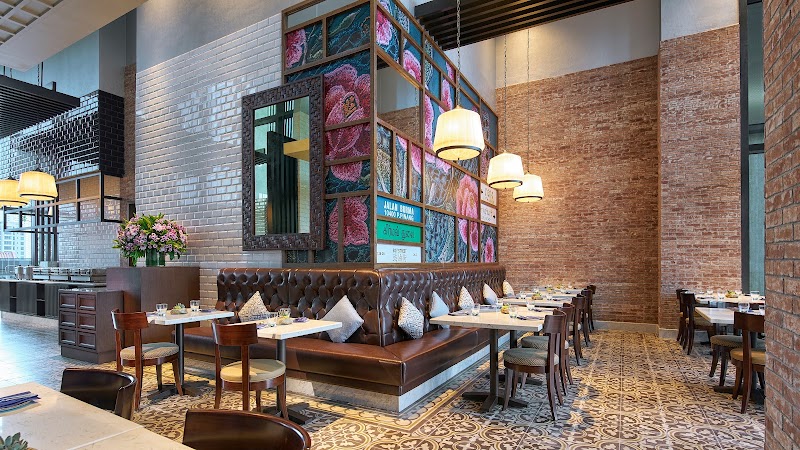
Blue Jasmine at Park Hotel Farrer Park holds a positioning that no other Thai restaurant in Singapore can match: a genuine open-air rooftop terrace on the seventh floor of the hotel, with a Thai menu calibrated to match the ambience of outdoor evening dining. At 4.2 stars on Google, the Blue Jasmine kitchen performs well enough that the view does not need to compensate for the food: the tom kha gai (coconut galangal chicken soup) is made with fresh galangal and kaffir lime leaf in a broth that balances the coconut cream richness with the sharpness of fresh lime juice, and the green mango salad (som tam mamuang) uses unripe green mango shredded to the correct coarse texture rather than the fine-cut approximation that many Singapore versions substitute. The grilled whole fish with chilli and lime dressing is the standout main: a whole seabass or barramundi marinated overnight and grilled over charcoal, dressed at the table with a fresh chilli-lime sauce that requires ripe limes and bird's eye chillies prepared to order rather than pre-mixed. For sunset dinners, birthday celebrations, and any occasion where the rooftop setting adds meaningfully to the experience, Blue Jasmine is the clear choice.
📍 Address: 10 Farrer Park Station Rd, Level 7, Park Hotel Farrer Park, Singapore 217564
🌐 Website: parkhotelgroup.com/en/farrerpark/blue-jasmine
"Blue Jasmine on a clear evening is one of the best dining experiences in Singapore: the rooftop setting at sunset with a tom yum that is genuinely well made is a combination that very few restaurants on the island can offer. The grilled fish with chilli lime is excellent. A restaurant that earns its position on quality, not just on the view.", Michelle Tan ★★★★★
5. Thanying: Heritage Thai Since 1987
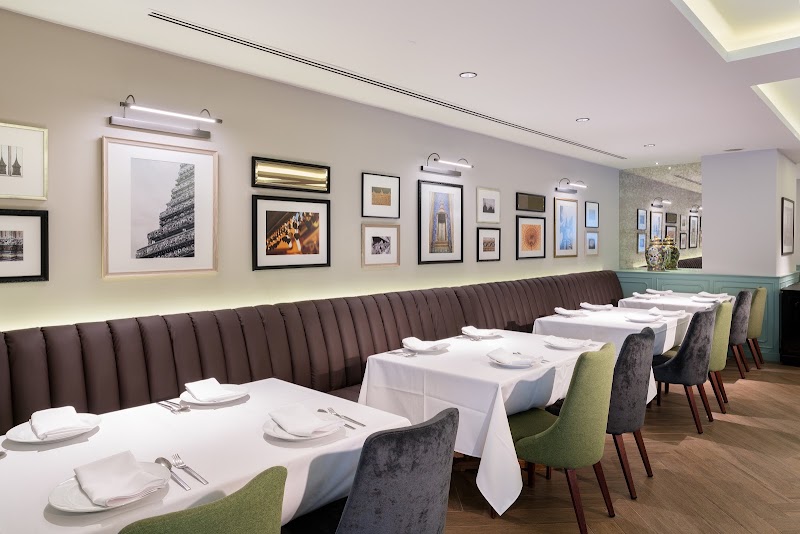
Thanying has been serving Thai food in Singapore since 1987: a tenure that makes it the longest-running Thai restaurant on this list and one of the oldest continuously operating Thai restaurants in Southeast Asia outside Thailand. At 4.1 stars on Google, the Thanying kitchen has maintained a fidelity to royal Thai cuisine traditions across nearly four decades that reflects genuine institutional commitment rather than the cultural approximation that time and market pressure tend to produce in long-running restaurant operations. The signature dish is the miang kham: fresh betel leaves filled with toasted coconut, dried shrimp, lime, shallots, ginger, chilli, and a palm sugar and fish sauce dressing: a preparation that requires fresh betel leaf procurement and same-day assembly that most restaurants outside Thailand no longer bother with. The massaman curry at Thanying uses a recipe from the Bangkok royal kitchen tradition, slow-braised and spiced with a complexity that reflects the dish's Persian-influenced origins. For diners who want to understand what Thai cuisine looked like before the casual chain era, Thanying is irreplaceable.
📍 Address: 165 Tanjong Pagar Rd, Singapore 088539
🌐 Website: thanying.com
"Thanying is the restaurant that taught me what Thai food actually is. Every visit feels like a history lesson delivered through food: the miang kham is something I have never found at the same quality anywhere else in Singapore. The fact that this restaurant has been here since 1987 and is still this good is a remarkable achievement.", Sonia Krishnamurthy ★★★★★
6. Kinloch: Modern Thai with Serious Cocktails
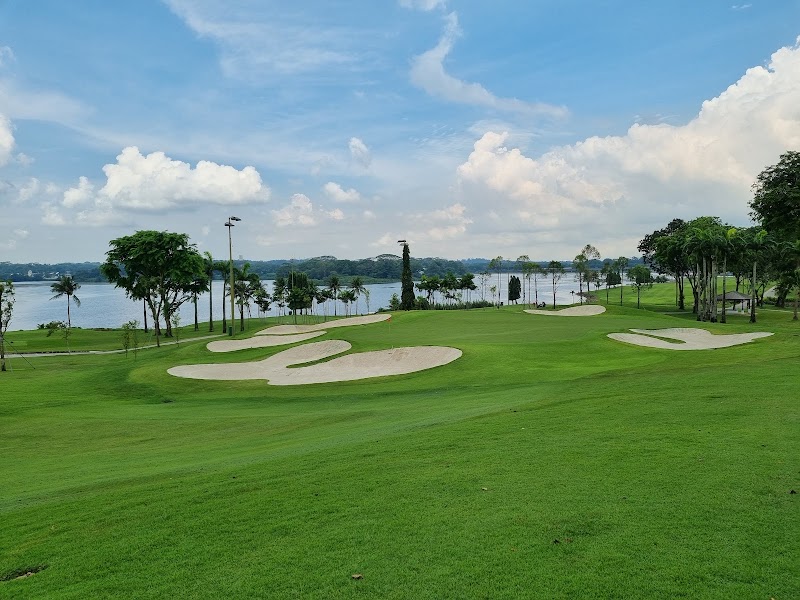
Kinloch at Tanjong Pagar occupies the emerging category of modern Thai: a restaurant that takes traditional Thai flavour architecture seriously while updating the format for a Singapore dining audience that wants natural wine pairings, craft cocktails, and a more contemporary service style than heritage Thai restaurants typically offer. At 4.2 stars on Google, the Kinloch kitchen is technically accomplished in a way that many modern-Thai concepts are not: the curry pastes are made from whole fresh aromatics, the sourcing shows genuine attention to Thai produce quality, and the spice calibration respects the original heat levels of the dishes rather than pre-emptively softening everything for the assumed local palate. The cocktail programme is the most credible on this list, built around Thai aromatics: lemongrass, galangal, kaffir lime, butterfly pea flower: that complement rather than compete with the food. The laab gai (minced chicken salad with toasted rice powder and fresh herbs) is the standout: correctly acidic, properly herbed, and with the toasted rice powder adding the textural and nutty dimension that distinguishes a real laab from an imitation. For post-work dinners and food-focused social occasions, Kinloch is the most contemporary Thai option in Singapore's CBD precinct.
📍 Address: 6 Tanjong Pagar Plaza, #01-04, Singapore 081006\
"Kinloch is the Thai restaurant I bring food-obsessed friends to when I want somewhere that takes both the cuisine and the drinks programme seriously. The laab gai here is made properly: toasted rice powder, fresh mint, the right amount of fish sauce and lime: and the cocktails using Thai aromatics are some of the most interesting in the CBD. This is modern Thai done with real conviction.", Bernard Lim ★★★★★
7. Jai Thai: Singapore's Best Casual Thai Chain
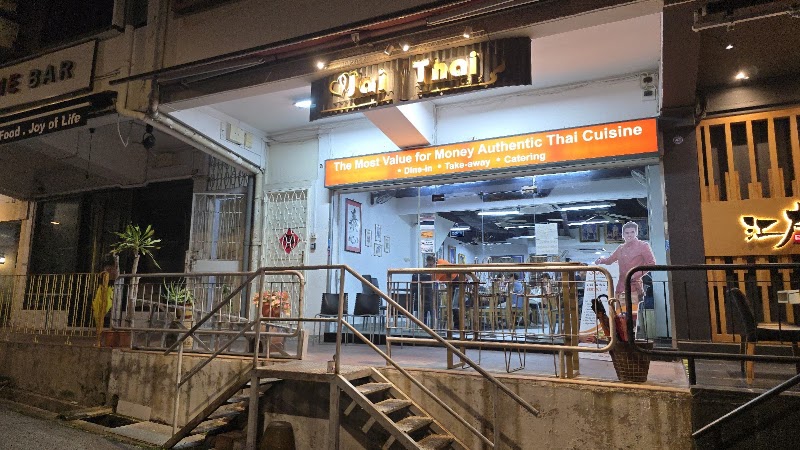
Jai Thai, with outlets at 313@Somerset and other locations across Singapore, occupies the casual Thai chain segment with a consistent quality record that most multi-outlet Thai operators fail to sustain. At 4.1 stars on Google, the Jai Thai kitchen delivers on the expectation that casual Thai dining creates: pad thai noodles with properly textured rice noodles, wok-fried prawns or chicken in a tamarind-palm sugar sauce with bean sprouts and ground peanuts that hits the canonical balance; green curry that uses a paste blend that is decent without being exceptional but reliable across all outlets; and tom yum soup available in both clear and coconut cream variants at price points that make it the go-to casual Thai recommendation for Orchard Road and the Somerset corridor. The basil stir-fry (pad kra pao) is another Jai Thai strength: high-heat wok cooking with Thai holy basil (not sweet basil, a substitution that marks a lazy kitchen) and bird's eye chillies that deliver genuine heat. For weekday lunches, quick family dinners, and any occasion where the priority is reliable casual Thai without the premium pricing of the fine dining operators, Jai Thai is the first recommendation.
📍 Address: 313 Orchard Rd, #B2-32/33 313@Somerset, Singapore 238895\
"Jai Thai is the answer to the question 'where do I go for reliable casual Thai in Singapore?' The pad thai is exactly what it should be: tamarind-forward, properly textured noodles, good wok heat. The basil stir-fry uses holy basil which immediately tells you the kitchen cares about getting it right. My family has been eating here for years and the quality never slips.", Jenny Ho ★★★★★
8. Bangkok Jam: The Dependable Multi-Outlet Standard
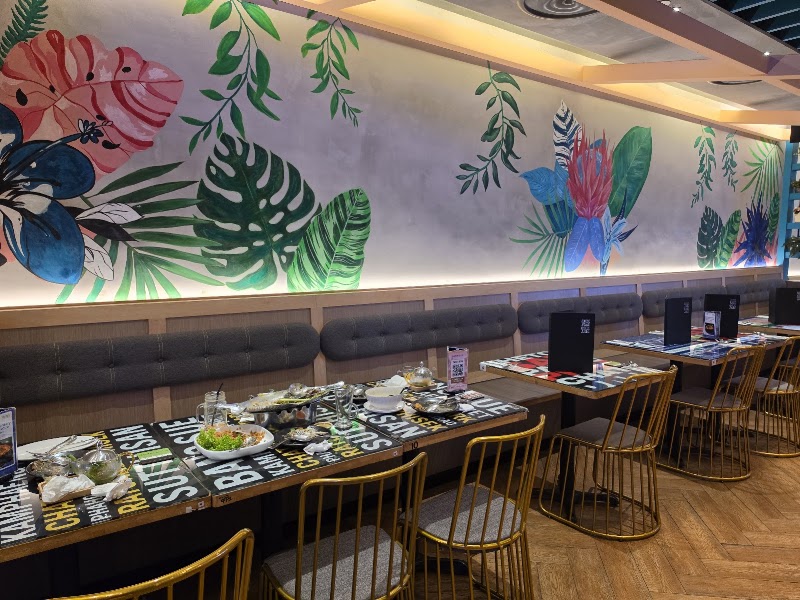
Bangkok Jam operates across multiple Singapore outlets with a consistency record that is harder to achieve than its casual positioning suggests. At 4.0 stars on Google, Bangkok Jam is the broadest-reach Thai restaurant chain on this list: its outlets span shopping malls across multiple districts, and the menu covers the full range of Thai dishes from appetisers through curries, stir-fries, and desserts at price points that are among the most accessible on this list. The Bangkok Jam kitchen strength is its protein preparation: the grilled items: chicken satay, grilled pork collar (mu yang), and tiger prawns: are marinated properly and cooked over the right heat, with char where char is appropriate rather than the uniform pale grey of a pan-cooked shortcut. The red curry (gaeng phet) is made with a commercial paste blend that is better quality than competitors at this price tier, producing a curry with reasonable complexity and proper coconut milk sweetness. Bangkok Jam does not aspire to be anything other than what it is: reliable, accessible, consistently decent casual Thai: and within that remit it delivers more reliably than most comparable multi-outlet Thai operators in Singapore.
📍 Address: Multiple outlets: flagship at Suntec City, 3 Temasek Blvd, #03-325, Singapore 038983
🌐 Website: bangkokjam.com.sg
"Bangkok Jam is my default when I need Thai food quickly and I do not want to think about it. The grilled pork collar is reliably good, the red curry is decent, and there is always an outlet wherever I am in Singapore. It is not the most exciting Thai restaurant on this list but it is consistently fine and that has value too.", Ryan Goh ★★★★
9. The Thai Party: Holland Village Neighbourhood Gem
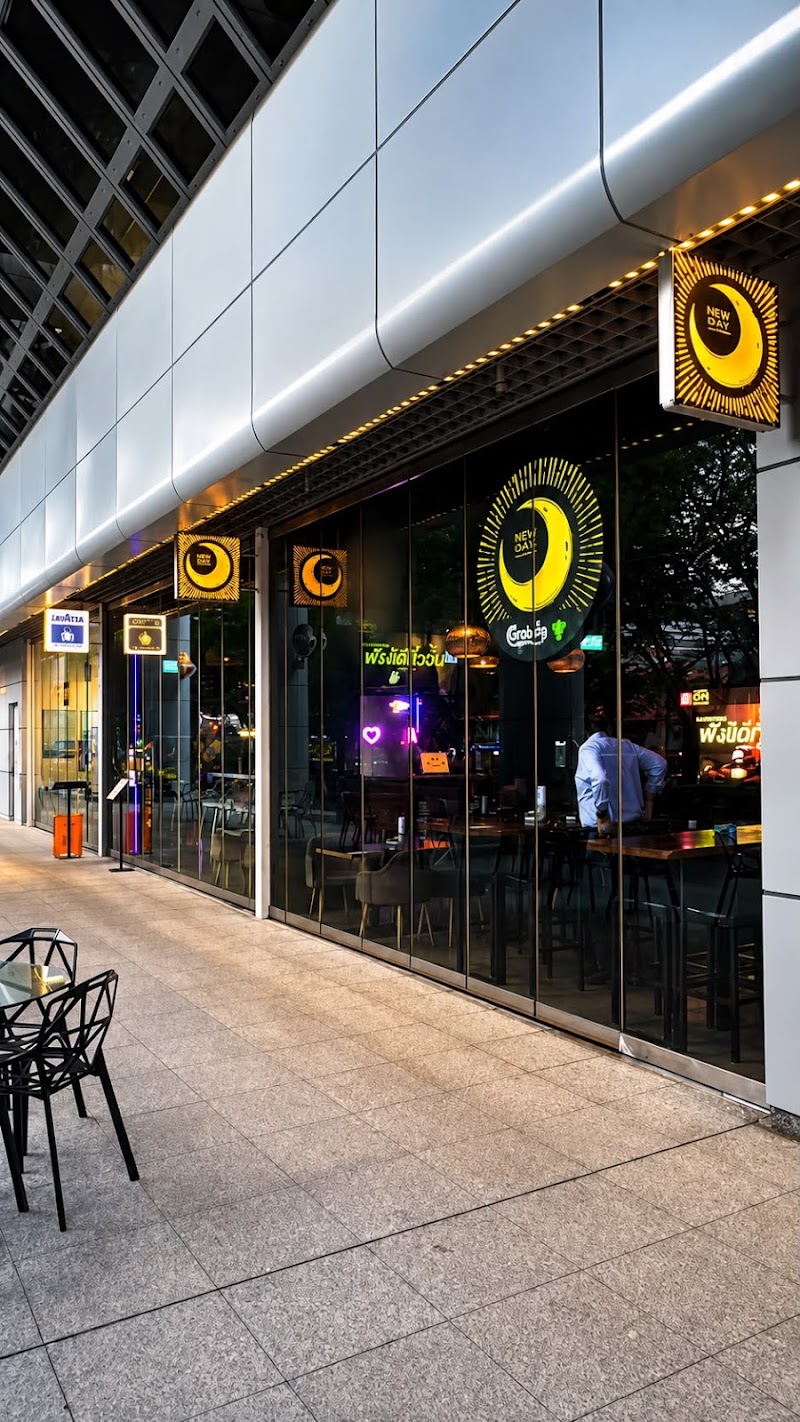
The Thai Party at Holland Village has established a loyal neighbourhood following and a 4.1-star Google rating built on two standout dishes: pad thai and green mango salad: and a casual, unpretentious atmosphere that fits the Holland Village dining culture precisely. The pad thai at The Thai Party is the best version at the casual price tier in Singapore: wide flat rice noodles cooked at high heat in a wok with the right tamarind-sugar-fish sauce balance, a proper egg coating around the noodles (not broken and scrambled separately), bean sprouts added at the final moment to preserve their crunch, and fresh lime and ground peanuts served alongside for table-side adjustment. The som tam (green papaya salad) is made to order with fresh shredded papaya, bird's eye chillies, cherry tomatoes, long beans, dried shrimp, and a fish sauce dressing pounded together in a mortar and pestle: the use of a mortar rather than a mixing bowl makes a tangible difference to the bruising of the papaya and the emulsification of the dressing. Holland Village's relaxed dining precinct suits The Thai Party's casual format and makes it one of the most enjoyable eating experiences on this list for the right occasion.
📍 Address: 34 Lorong Mambong, Singapore 277690\
"The Thai Party makes the best pad thai I have found at this price point in Singapore: properly made with the right noodle texture, the wok heat you can taste in the dish, and the tamarind balance exactly right. The som tam is made to order in a mortar which is how it should be done. A genuine neighbourhood gem in Holland Village.", Catherine Yee ★★★★★
10. Siam Kitchen: Best Value Thai in Singapore
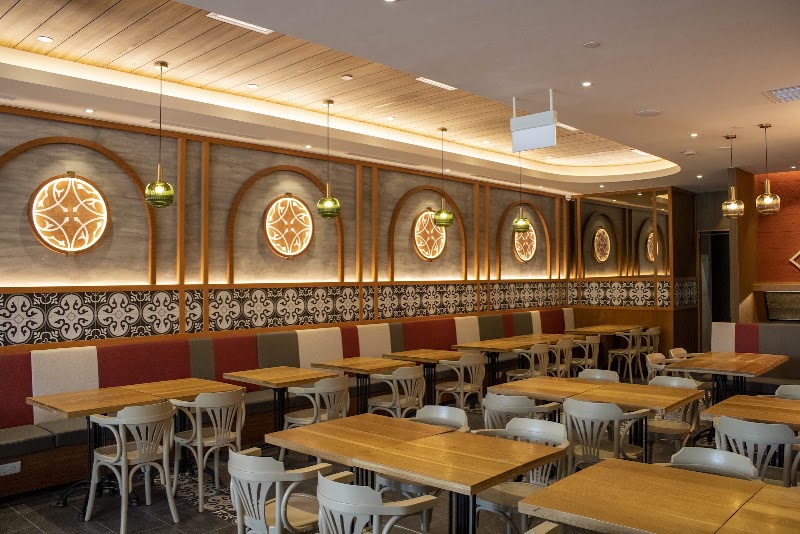
Siam Kitchen rounds out this list as the best value proposition in Singapore's Thai dining landscape: a hawker-adjacent multi-outlet operation that delivers Thai cooking at price points below SGD 15 per dish without the quality compromises that this price tier typically demands. At 4.0 stars on Google across its outlets, Siam Kitchen demonstrates that the key factors determining Thai food quality: fresh aromatics over dried substitutes, proper wok heat, correct paste preparation: are not inherently expensive inputs, merely ones that require kitchen discipline and ingredient procurement care. The green curry is the flagship: a rich, aromatic coconut milk curry with a paste that clearly contains fresh lemongrass and kaffir lime leaf, served with jasmine rice at a price that is half what the fine dining operators charge for a comparable dish. The tom yum is made with fresh mushrooms, lemongrass stalks, and galangal pieces visible in the broth rather than strained out, and the heat level defaults to a proper Thai-restaurant spicy rather than the muted Singapore calibration that casual operators often default to. For diners who want genuine Thai flavours at food court prices, Siam Kitchen is the most reliable option in this category.
📍 Address: Multiple outlets: Jurong Point, 1 Jurong West Central 2, #B1-K27, Singapore 648886\
"Siam Kitchen is the answer to 'where can I get genuinely good Thai food at hawker prices in Singapore?' The green curry here is better than some restaurants charging three times as much: you can taste the fresh lemongrass and kaffir lime in the paste. The tom yum has actual heat, which is rare at this price point. Outstanding value.", Marcus Tan ★★★★
How They Compare
| Restaurant | Rating | Style | Must-Order | Price Range | Location |
|---|---|---|---|---|---|
| Nara Thai Cuisine | 4.3 ★ | Upscale Thai | Green Curry, Mango Sticky Rice | $$$ | Orchard / ION |
| Patara Fine Thai Cuisine | 4.2 ★ | Fine Dining Thai | Massaman Curry, Tom Yum | $$$ | Tanglin Mall |
| Long Chim | 4.2 ★ | Celebrity Chef | Pad See Ew, Nahm Prik | $$$ | Marina Bay Sands |
| Blue Jasmine | 4.2 ★ | Rooftop Thai | Grilled Fish, Tom Kha Gai | $$$ | Farrer Park |
| Thanying | 4.1 ★ | Heritage Thai | Miang Kham, Massaman | $$ | Tanjong Pagar |
| Kinloch | 4.2 ★ | Modern Thai | Laab Gai, Thai Cocktails | $$ | Tanjong Pagar |
| Jai Thai | 4.1 ★ | Casual Chain | Pad Thai, Pad Kra Pao | $$ | Somerset / Orchard |
| Bangkok Jam | 4.0 ★ | Casual Chain | Grilled Pork Collar, Red Curry | $$ | Multiple Outlets |
| The Thai Party | 4.1 ★ | Neighbourhood Thai | Pad Thai, Som Tam | $$ | Holland Village |
| Siam Kitchen | 4.0 ★ | Value Thai | Green Curry, Tom Yum | $ | Multiple Outlets |
10 Essential Thai Dishes to Order in Singapore
Understanding the canonical Thai dishes helps you evaluate any Thai restaurant quickly and accurately. These are the dishes that reveal kitchen quality most directly.
Pad Thai is the most commonly ordered Thai dish in Singapore and simultaneously the most frequently executed poorly. A correct pad thai uses flat rice noodles (sen lek) stir-fried at high heat in tamarind concentrate, fish sauce, and palm sugar, with a whole egg fried into the noodle mass and not scrambled separately, bean sprouts added at the last moment for crunch, and ground dried shrimp providing a background umami that many Singapore versions omit. Fresh lime and crushed peanuts are served alongside for table adjustment, not mixed in during cooking.
Green Curry (Gaeng Keow Wan) is the benchmark dish for curry paste quality. A kitchen that makes its green curry paste from whole fresh aromatics: green chillies, galangal, lemongrass, kaffir lime zest, coriander root, and shrimp paste: will produce a curry with a brightness and complexity that commercial paste blends cannot replicate. The coconut milk should show a slight oil separation on the surface (indicating proper reduction), and Thai eggplants should be added fresh rather than pre-simmered to mushiness.
Tom Yum is the clearest indicator of fresh herb sourcing. The broth requires fresh lemongrass stalks, fresh galangal slices, and fresh kaffir lime leaves: dried versions of any of these three aromatics produce a flat, one-dimensional soup that experienced diners can identify immediately. The correct tom yum is sour-forward and lightly spicy with a clear broth; the tom yum nam khon (coconut cream version) is richer and more forgiving but requires the same fresh aromatic foundation.
Som Tam (Green Papaya Salad) tests whether the kitchen has a mortar and pestle and uses it. The papaya shreds should be lightly bruised from pounding rather than simply tossed in dressing: the bruising releases moisture and creates a different texture and flavour integration. Bird's eye chillies should be pounded to a paste with garlic, not added sliced, and dried shrimp provides the essential umami base alongside fish sauce.
Massaman Curry is the most complex curry on the Thai canon: a slow-braised preparation influenced by Persian traders that incorporates whole spices (cardamom, cinnamon, star anise) alongside a mild red curry paste base. The braise must be long enough for the protein (beef, lamb, or chicken) to become genuinely tender, and the tamarind and palm sugar balance that finishes the curry must be adjusted carefully. A massaman that is made quickly cannot achieve the depth of flavour the dish requires.
Larb (Minced Meat Salad) is the definitive test of whether a Thai restaurant uses toasted rice powder (khao khua). The powder, made by dry-toasting raw jasmine rice in a wok until golden and grinding it, adds a nutty, slightly smoky texture note to the salad that is irreplaceable. Restaurants that skip the toasted rice produce a flat, wet larb rather than the textured, aromatic version. Fresh mint, coriander, shallots, and lime juice are the other non-negotiable fresh elements.
Pad Kra Pao (Holy Basil Stir-Fry) is the dish that reveals whether a restaurant has sourced Thai holy basil (kra pao) rather than substituting sweet basil (horapha) or Italian basil: both common shortcuts in Singapore. Thai holy basil has a clove-like, slightly peppery flavour that is distinctive and irreplaceable; sweet basil produces a dish that tastes generically Asian rather than specifically Thai. The stir-fry requires very high wok heat to develop the char and aromatic volatilisation that defines the dish.
Tom Kha Gai (Coconut Galangal Soup) tests fresh galangal procurement. The galangal slices in tom kha should be thick, firm, and fragrant: dried galangal in powdered or sliced form produces a noticeably duller soup. The coconut cream should be full-fat and unsweetened, producing a rich, slightly oily broth that carries the aromatic compounds from the lemongrass, kaffir lime leaf, and galangal without tasting sweet or canned.
Mango Sticky Rice (Khao Niao Mamuang) is the Thai dessert against which all others are measured. The glutinous rice must be freshly cooked and still warm (not reheated from refrigerated stock), dressed with warm coconut cream and a pinch of salt, paired with ripe mango that is fragrant and sweet rather than starchy and underripe. Toasted sesame and mung beans are traditional garnishes. This dish is extremely difficult to execute consistently at volume because the rice quality degrades quickly and the mango ripeness window is narrow.
Grilled Whole Fish (Pla Pao) with chilli-lime sauce is the simplest dish on this list and one of the hardest to execute well at restaurant volume. The fish (sea bass, tilapia, or barramundi) is packed with lemongrass and salt, wrapped in banana leaf or coated in salt crust, and cooked over charcoal or under a high broiler until the skin crisps. The accompanying sauce: fresh lime juice, fish sauce, palm sugar, bird's eye chillies, garlic, and coriander: must be made to order for the lime brightness to remain present in the eating.
Authentic Thai vs Thai-Singaporean Fusion: How to Tell the Difference
Singapore's Thai restaurant landscape spans a wide spectrum from close-to-authentic traditional Thai cooking to Thai-Singaporean fusion that adapts the cuisine for local taste preferences. Understanding the markers of each helps diners choose the right restaurant for their appetite.
Spice level is the most immediate indicator. Authentic Thai restaurants calibrate their default spice levels to Thai standards, which are significantly hotter than the typical Singapore palate expects. If a restaurant's green curry arrives mild without a specific request for reduced spice, the kitchen has pre-adapted the recipe for the local market rather than cooking Thai food as it exists in Thailand. The restaurants at the top of this list: Nara, Patara, Long Chim, and Kinloch: all offer heat levels that approach the Thai original, with table-side calibration available for diners who prefer milder versions.
Fresh herb versus dried herb substitution is the clearest quality marker. Authentic Thai cooking uses fresh lemongrass, fresh galangal, fresh kaffir lime leaves, fresh coriander root, and fresh Thai holy basil in dishes where these aromatics define the flavour. Singaporean-adapted versions frequently substitute dried lemongrass powder, dried galangal powder, and dried kaffir lime leaf in recipes where this substitution is immediately detectable. The tom yum, green curry, and pad kra pao are the three dishes where fresh-versus-dried is most apparent.
Paste preparation method divides the restaurants most clearly. A kitchen making curry paste from whole fresh aromatics (the authentic method) produces a different quality of curry than one using commercial paste from a jar or catering-grade tub. The difference is evident in the brightness and complexity of the finished dish: fresh paste produces a curry that evolves across the eating experience rather than delivering a single undifferentiated hit of spice and coconut. Nara, Patara, and Long Chim all operate with in-house paste preparation. Most casual chain operators and many casual independent restaurants use commercial paste, which is not necessarily a disqualification at the value tier but matters significantly at premium pricing.
Menu breadth versus curry-and-stir-fry compression is a secondary indicator. Authentic Thai cuisine encompasses a vast range of preparations including chilli dips and relishes (nahm prik), salads (yam), soups, curries, stir-fries, grilled items, steamed dishes, and a sophisticated dessert tradition. Restaurants whose menus compress to green curry, red curry, pad thai, tom yum, and basil stir-fry are offering a tourist-facing shorthand version of Thai food rather than the full tradition. Long Chim and Thanying both operate with menu depth that reflects genuine engagement with Thai culinary breadth.
Coconut milk handling is a technical marker that experienced diners can assess from the curry's appearance. In traditional Thai cooking, coconut cream is added to the wok first and cooked until the oil splits from the cream: visible as a thin film of coconut oil on the surface of the finished curry. This "cracking the coconut cream" technique produces a deeper-flavoured, more aromatic curry and is the method that Nara and Patara consistently apply. Curries made with the full coconut milk added directly without splitting produce a thinner, more uniform sauce that lacks the aromatic intensity of the traditional method.
Want to be featured?
Get your business listed as a top pick and reach thousands of Singapore customers actively searching for your services.
Frequently Asked Questions
What is the best Thai food in Singapore?
Nara Thai Cuisine at ION Orchard is our top overall pick: the green curry and mango sticky rice are made with house-ground fresh paste and freshly cooked glutinous rice at a standard that no comparable restaurant in Singapore consistently matches. For fine dining and business entertaining, Patara at Tanglin Mall is the benchmark. Long Chim at Marina Bay Sands is the pick for diners who want the most historically authentic and research-driven Thai cooking available in Singapore.
How spicy is Thai food in Singapore?
Most Singapore Thai restaurants calibrate their default spice levels milder than the Thai original to accommodate local preferences. If you want food at closer to Bangkok heat levels, request "Thai spicy" explicitly at any restaurant on this list: the kitchens are capable of it, they simply default to a gentler calibration. Restaurants at the top of this list (Nara, Patara, Kinloch, Long Chim) are more willing to serve at authentic spice levels than casual chain operators. Siam Kitchen and The Thai Party also default to a proper spicy level that is noticeably hotter than most comparable casual restaurants.
What is the most popular Thai dish in Singapore?
Pad thai is the most ordered Thai dish in Singapore across all restaurant tiers, followed by green curry and tom yum soup. These three dishes appear on every Thai restaurant menu and function as the standard evaluation benchmarks for a kitchen's quality. Pad kra pao (holy basil stir-fry with rice) has grown significantly in popularity among food-literate Singapore diners over the past five years, driven partly by social media and partly by the visibility of the dish in Bangkok street food coverage.
Is Thai food halal in Singapore?
Thai cuisine is not inherently halal: traditional Thai cooking uses fish sauce (nam pla), shrimp paste (kapi), and pork in many dishes. However, several Thai restaurants in Singapore operate halal-certified kitchens, including some Bangkok Jam and Siam Kitchen outlets. Muslim diners should check the halal certification status of specific outlets before visiting. The restaurants at the top of this list: Nara, Patara, Long Chim, Blue Jasmine: are not halal-certified. For a confirmed halal Thai dining experience, verify directly with the specific restaurant outlet.
How much does Thai food cost in Singapore?
Casual Thai dining at restaurants like Jai Thai, Bangkok Jam, The Thai Party, and Siam Kitchen costs SGD 12–20 per dish, with a full meal per person landing at SGD 20–30 including drinks. Mid-tier restaurants like Thanying and Kinloch run SGD 25–40 per person for a full meal. Fine dining Thai at Nara, Patara, Blue Jasmine, and Long Chim costs SGD 40–70 per person with beverages. The quality differential between value and fine dining tiers on this list is meaningful: the fresh paste preparation and ingredient sourcing at the premium tier produces a noticeably different result: but the casual tier restaurants on this list are all worth the price they charge.
Verdict
Nara Thai Cuisine is the best Thai restaurant in Singapore in 2026: the green curry, the tom yum, and the mango sticky rice all deliver at a standard that no comparable multi-outlet Thai restaurant can match, driven by fresh paste preparation and ingredient sourcing that is evident in every dish. Patara Fine Thai Cuisine remains the most reliable choice for business dining and formal occasions, with a kitchen rooted in royal Thai tradition and a service standard to match. Long Chim is the most intellectually serious Thai restaurant on the island: David Thompson's research-grade approach to historical Thai recipes produces dishes you will not find on any other Singapore Thai menu. For the best rooftop Thai experience, Blue Jasmine at Park Hotel Farrer Park is unmatched; for heritage value, Thanying's nearly four decades of continuous operation at Tanjong Pagar speaks for itself. And for pad thai at the casual end that is actually made correctly, The Thai Party at Holland Village is the most underrated restaurant on this list: a neighbourhood gem executing the most popular Thai dish in Singapore at the standard it deserves.