
In 2020, UNESCO inscribed Singapore hawker culture onto its Representative List of the Intangible Cultural Heritage of Humanity: the first time a food culture from a city-state had received that designation. The recognition acknowledged something that residents of Singapore have understood for generations: the hawker centre is not simply a place to eat cheaply. It is the social infrastructure of the city, the mechanism by which a multi-ethnic immigrant society developed a shared culinary identity, and the setting in which some of the most technically demanding street food in the world is prepared daily by vendors who have spent decades mastering a single dish.
Singapore's hawker centres trace their origins to the street hawkers of the colonial era: itinerant food vendors who operated from push carts along the waterfront, in alleyways, and outside residential blocks from the 1820s onward. In the 1960s and 1970s, the government of Lee Kuan Yew undertook a systematic resettlement of these hawkers into purpose-built centres with running water, electricity, and sanitation infrastructure. The centres preserved the food diversity and price accessibility of the street hawker tradition while eliminating the hygiene risks of unlicensed open-air cooking. The result, over fifty years later, is a network of over a hundred hawker centres across the island, each with its own character, its own anchor stalls, and its own community of regulars who have been eating there for decades.
We visited every major hawker centre in Singapore across multiple sessions: weekday lunches, weekend mornings, and evening sittings: eating through the anchor stalls, the Michelin-mentioned establishments, and the lesser-known stalls that locals navigate to before the tourists arrive. What follows is the definitive ranking of Singapore's ten best hawker centres in 2026.
Key Takeaways
- Best overall: Old Airport Road Food Centre in Geylang is the consensus best hawker centre in Singapore: the largest variety, the most Michelin-mentioned stalls, and a local credibility that tourist-facing centres cannot match
- Best for tourists: Maxwell Food Centre in Tanjong Pagar is the most accessible introduction to Singapore hawker food, home to Tian Tian Chicken Rice and centrally located near the CBD
- Best heritage: Tiong Bahru Market combines a functioning neighbourhood wet market with a hawker centre that has operated continuously since 1955, with char kway teow and chwee kueh that define the Tiong Bahru identity
- Best night hawker: Lau Pa Sat in the CBD transforms after 7pm when the adjacent road is closed and satay stalls establish the famous Satay Street: one of the most atmospheric food experiences in Singapore
- Best Malay food: Geylang Serai Market is Singapore's primary Malay food hub, with nasi padang, mee rebus, and rendang that represent the definitive expression of Singapore Malay cuisine
- Hawker food in Singapore costs SGD 3–8 per dish at most centres; a full meal of two to three dishes with drinks rarely exceeds SGD 15 per person
- Newton Food Centre is the most famous hawker centre among international tourists but is the only centre on this list where we recommend caution: aggressive touting and above-market pricing make it a less authentic experience than any other entry here
⭐ Top Pick
Old Airport Road Food Centre
Pros
- ✓The highest concentration of Michelin Bib Gourmand and Michelin-mentioned stalls of any single hawker centre in Singapore: including Eminent Frog Porridge, Dong Ji Fried Kway Teow, and multiple stalls recognised across successive Michelin guides
- ✓Enormous scale with over 200 stalls covering virtually every major Singapore hawker cuisine: Chinese, Malay, Indian, Peranakan, and regional variants: making it possible to eat a different dish every visit for months
- ✓Authentic local atmosphere without the tourist density of Maxwell or Newton: the crowds here are overwhelmingly Singaporean residents from the Geylang and Kallang corridors who treat this as their neighbourhood centre
- ✓Evening atmosphere is particularly good: the centre stays busy and well-lit into the late hours, and the surrounding Geylang neighbourhood provides context for the food culture
Cons
- ✗Distance from the MRT network is the primary practical limitation: the nearest station is Aljunied or Dakota, each requiring a 10–15 minute walk or a short taxi/Grab ride, which adds friction compared to MRT-accessible centres
- ✗The scale of the centre can be overwhelming on a first visit: with over 200 stalls, navigating to the best options requires either advance research or a willing local guide
- ✗Parking is available but can be congested on weekends and public holidays when the centre draws visitors from across the island
How We Ranked
We evaluated each hawker centre across five criteria that reflect what matters most to both local regulars and informed visitors:
Stall quality and Michelin recognition is the primary dimension. We counted the number of Michelin Bib Gourmand awards, Michelin star holders, and Michelin-recommended stalls at each centre, and supplemented this with our own assessment of the best stalls across multiple visits. A centre with one exceptional stall ranks lower than a centre with consistently high quality across many stalls.
Cuisine variety measures how completely a hawker centre represents the full range of Singapore's multi-ethnic food culture. The best centres offer Chinese, Malay, Indian, and Peranakan options at high quality simultaneously: a diversity that reflects Singapore's food heritage and provides genuine choice rather than a single-cuisine focus.
Accessibility covers MRT proximity, parking, operating hours, and the practical friction involved in visiting. Hawker centres that are difficult to reach without local knowledge or private transport rank lower than equivalent centres with good public transport links.
Atmosphere and authenticity evaluates whether the centre feels like a working community food hub or a tourist-facing performance. Centres where the crowd is primarily local residents eating their regular meals score higher than centres where tourists outnumber locals and pricing reflects that imbalance.
Seating capacity and comfort considers whether it is practically possible to find a seat during peak hours, the quality of ventilation and fan coverage, and whether the physical environment allows for a comfortable meal rather than a rushed, standing exercise.
Our Top Picks
1. Old Airport Road Food Centre, Best Overall
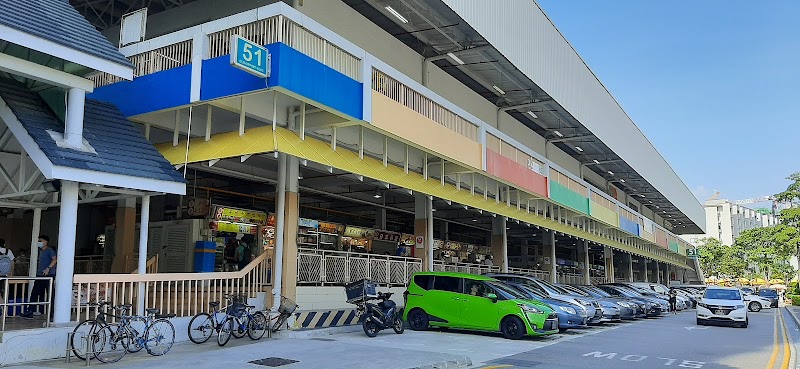
Old Airport Road Food Centre, at 51 Old Airport Road in Geylang, is the hawker centre that Singapore's most knowledgeable food community points to when asked for the best. It occupies the site of Singapore's original Kallang Airport terminal: a piece of city history that adds a layer of significance to a centre that would be remarkable by food standards alone. With over 200 stalls spread across a large single-floor space, it is one of the most comprehensively stocked hawker centres on the island, and the quality ceiling here: set by a cluster of Michelin-recognised stalls: is the highest of any centre we visited.
The anchor stalls are well known among Singapore food obsessives: Eminent Frog Porridge and Mixed Vegetable Rice at #01-97 represents one of the most distinctive preparations in the centre, the frog cooked in a variety of styles with a skill that makes the ingredient approachable to the uninitiated. Dong Ji Fried Kway Teow consistently ranks among the best char kway teow preparations on the island. The centre also houses excellent lor mee, Hokkien mee, and beef noodles from stalls that have been operating in the same unit for decades. The cumulative effect of eating through a serious session at Old Airport Road: two hours, four to six dishes, a systematic walk through the aisles before choosing: is the closest experience Singapore has to eating the full repertoire of its hawker food culture in a single sitting.
The atmosphere is genuinely local. The crowd at peak hours is almost entirely composed of Geylang and Kallang residents, nearby office workers, and the food-serious contingent from across the island who make the trip specifically for the quality. International tourists are present but not dominant. This balance: local authenticity without inaccessibility: is what places Old Airport Road above the more tourist-friendly centres on this list.
📍 Address: 51 Old Airport Rd, Singapore 390051
🕐 Hours: Most stalls open 6am–9pm; evening stalls operate until midnight
2. Chinatown Complex Food Centre, Best for Michelin
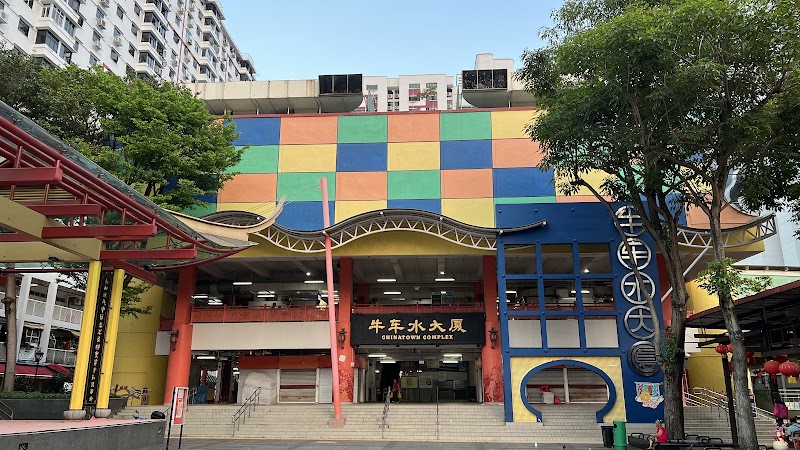
Chinatown Complex Food Centre is the largest hawker centre in Singapore by stall count: a two-floor structure on Smith Street in Chinatown housing over 260 stalls, operating from before dawn through to the late evening. It holds the unique distinction of being the home of Hawker Chan: the stall operated by Chan Hon Meng, whose soya sauce chicken rice and noodles became the world's first Michelin-starred hawker dish when the 2016 Michelin Guide Singapore awarded it a star at a price point of SGD 2 per plate. The star was subsequently removed as Chan expanded into a restaurant chain, but the original stall remains in operation at the food centre and the quality of the base preparation: a soya sauce-braised chicken with a lacquered, deeply savoury skin: continues to justify the original recognition.
Beyond Hawker Chan, the food centre offers one of the most complete expressions of traditional Chinese hawker cooking in Singapore: roast meats, claypot rice, oyster omelette, bak kut teh, and multiple generations of family-run stalls that have operated continuously from the same unit since the centre opened. The Chinatown location provides strong MRT access via Chinatown station on both the North-East and Downtown lines, and the centre is walkable from multiple points across the heritage district. For a first serious encounter with Singapore hawker food, Chinatown Complex provides scale, history, and a Michelin-grounded point of orientation that no other single centre can match.
📍 Address: 335 Smith St, #02-001, Singapore 050335
🕐 Hours: 6am–11pm daily (individual stall hours vary)
3. Tiong Bahru Market, Best Heritage Centre
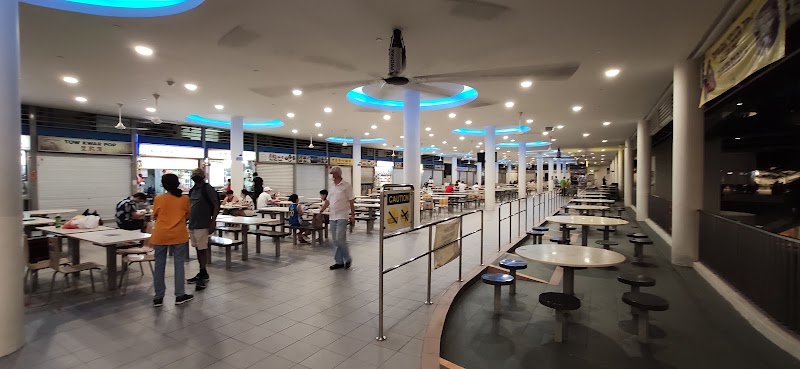
Tiong Bahru Market is one of the few hawker centres in Singapore that functions simultaneously as a neighbourhood wet market and a food centre: a combination that has largely been replaced by separated facilities elsewhere but survives here in a format that preserves the original character of Singapore's post-war food infrastructure. The building, a circular structure on Seng Poh Road completed in its current form in the 1950s, sits within the Tiong Bahru estate, Singapore's first public housing project and now one of the city's most architecturally distinctive heritage neighbourhoods.
The food centre's two most celebrated stalls represent opposite ends of the hawker repertoire: Jian Bo Shui Kueh produces chwee kueh: steamed rice flour cups topped with preserved radish and chilli: from a preparation process that starts before 5am, and the result is widely considered the definitive version of the dish in Singapore. Lor Hong Guan, a char kway teow stall operated across generations of the same family, produces a version of the flat rice noodle dish that is smoky, wok-fragrant, and technically excellent: one of the top three char kway teow preparations on the island. The centre also houses strong carrot cake, tau huay, and popiah stalls that reflect a Hokkien-Teochew community food tradition rooted in the Tiong Bahru estate.
The weekend crowd at Tiong Bahru is a combination of long-term residents, younger residents attracted by the neighbourhood's café and boutique culture, and food-motivated visitors from across the island. The market section: fresh fish, vegetables, and wet goods on the ground floor: continues to serve the resident community daily. For a hawker centre visit that connects the food to the broader cultural and architectural context of Singapore's modernisation, Tiong Bahru is unmatched.
📍 Address: 30 Seng Poh Rd, Singapore 168898
🕐 Hours: 6am–9pm daily; wet market from 5am
4. Maxwell Food Centre, Best for Tourists
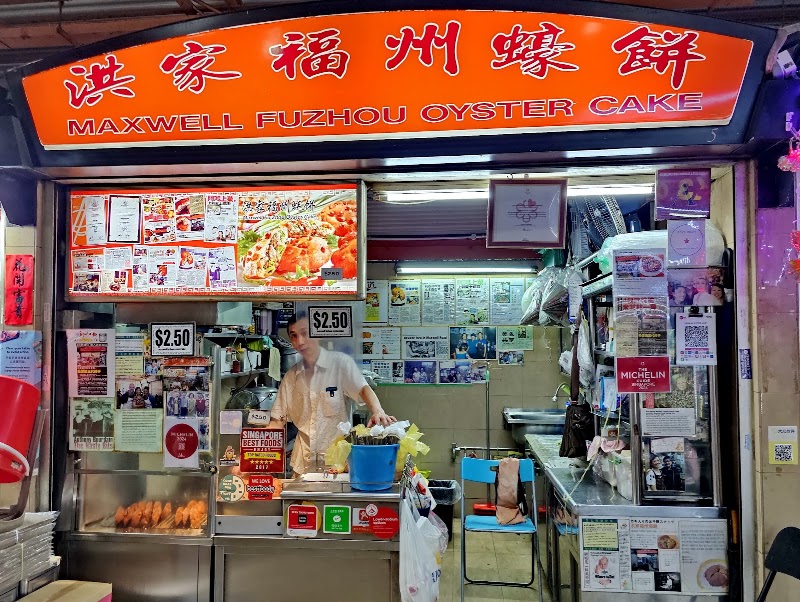
Maxwell Food Centre, on Kadayanallur Street in Tanjong Pagar, is the single most visited hawker centre in Singapore and the most appropriate starting point for any visitor encountering Singapore hawker food for the first time. The centre's anchor tenant, Tian Tian Hainanese Chicken Rice at stall #01-10/11, became internationally known after Anthony Bourdain featured it on No Reservations and is consistently cited as Singapore's most famous hawker stall. The queue at Tian Tian on any weekday from 11am onward is a cultural event in its own right: a line of tourists, regulars, and food journalists that reflects the stall's standing as a genuine benchmark rather than a manufactured attraction.
The centre sits at the edge of the Tanjong Pagar conservation area, a short walk from Tanjong Pagar MRT and within easy distance of the CBD, Chinatown, and the emerging Duxton Hill dining corridor. The physical space: a renovated single-floor centre with good ventilation and adequate seating: is comfortable by hawker standards without the architectural distinction of Tiong Bahru or the heritage character of Lau Pa Sat. Beyond Tian Tian, the centre houses Ah Tai Hainanese Chicken Rice (#01-07), Maxwell Fuzhou Oyster Cake (#01-05), and a range of well-regarded zi char and economy rice stalls that extend the eating possibilities well beyond the chicken rice anchor.
For visitors with limited time who want a reliable, accessible, and internationally credentialled hawker centre experience, Maxwell is the correct answer. For those with more time and local guidance, Old Airport Road is the upgrade.
📍 Address: 1 Kadayanallur St, Singapore 069184
🕐 Hours: 8am–10pm daily (individual stall hours vary)
5. Amoy Street Food Centre, Best CBD Lunch Spot
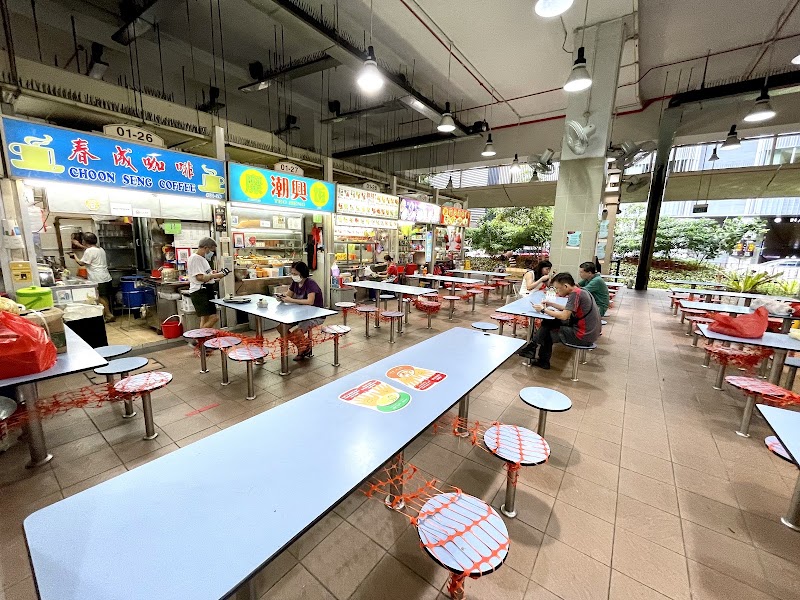
Amoy Street Food Centre, at 7 Maxwell Road adjacent to Telok Ayer MRT, is the hawker centre that the city's CBD professional class treats as its communal kitchen. Between 11:30am and 2pm on weekdays, the centre is packed to capacity with office workers from the surrounding financial district towers, legal chambers, and tech company offices: a crowd that has developed strong opinions about which stalls are worth the queue and which can be visited at off-peak hours for faster service. The density of genuinely excellent stalls relative to the centre's compact footprint makes Amoy Street one of the most efficient hawker centres on the island.
The Michelin Bib Gourmand stalls here include A Noodle Story, which produces an elevated version of the Singapore-style prawn noodle in a format that bridges the hawker and restaurant traditions, and The Fishball Story, whose handmade fish balls represent a preparation that is vanishing from Singapore's hawker landscape as cheaper machine-made alternatives proliferate. The centre also houses Ji Ji Noodle House for wonton noodles, and a range of economic rice, chicken cutlet, and dessert stalls that serve the weekday lunch crowd with speed and consistency. Evening and weekend visits offer a notably different experience: fewer people, more relaxed eating, and access to stalls that sell out by early afternoon on weekdays.
📍 Address: 7 Maxwell Rd, Singapore 069111
🕐 Hours: 7am–9pm (many stalls closed weekends/evenings)
6. Lau Pa Sat, Best Night Hawker
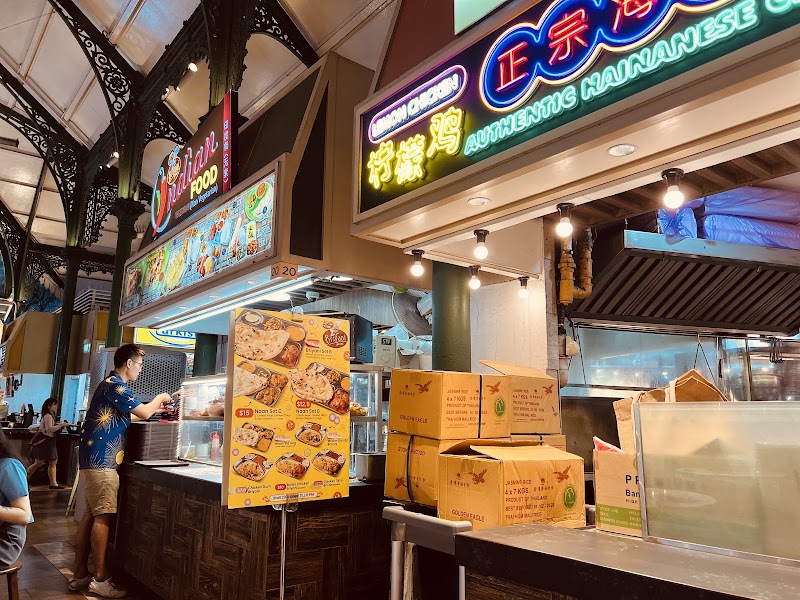
Lau Pa Sat: "old market" in Hokkien: occupies one of Singapore's most architecturally significant commercial structures: a Victorian cast-iron octagonal market building designed by George Coleman and completed in 1894, later relocated and reassembled at its current location at 18 Raffles Quay in the heart of the CBD. The building's ironwork columns, ornate ventilation louvers, and open-plan market floor have been preserved through multiple restorations and continue to give Lau Pa Sat a physical character that no purpose-built hawker centre can approximate.
The food during daytime hours is reliable across a broad range of hawker staples: chicken rice, laksa, satay, and Indian Muslim dishes from the stalls that surround the perimeter. The centre's defining moment, however, arrives after 7pm, when the adjacent section of Boon Tat Street is closed to traffic and a row of satay stalls establishes the famous Satay Street: a stretch of charcoal-fired satay grills, communal tables, and cold beer that represents one of Singapore's most atmospheric evening food experiences. The satay here: marinated chicken, beef, and mutton skewers grilled over charcoal with ketupat, cucumber, and peanut sauce: is not the technically finest on the island, but eaten in this setting, under the Victorian ironwork, in the warm Singapore evening with the CBD towers lit above, it becomes an experience that transcends the food itself.
📍 Address: 18 Raffles Quay, Singapore 048582
🕐 Hours: 24 hours; Satay Street from 7pm nightly
7. Geylang Serai Market, Best Malay Food
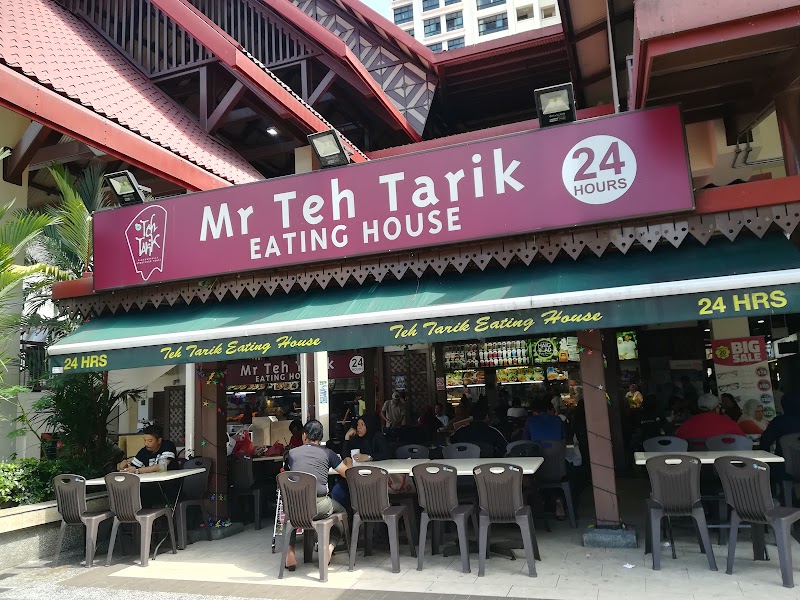
Geylang Serai Market, at 1 Geylang Serai adjacent to Paya Lebar MRT, is the primary Malay food hub in Singapore: a market and hawker centre that serves the Malay-Muslim community of the Geylang Serai and Kampong Glam corridors and preserves a food culture that represents one of the three foundational pillars of Singapore cuisine alongside Chinese and Indian traditions. The centre operates both as a wet market selling fresh halal produce and as a hawker centre with a concentration of Malay dishes that is unmatched at any other single location on the island.
The anchor dishes here are nasi padang: a Minangkabau-influenced rice plate with a selection of curried and braised side dishes: prepared by stalls that have maintained family recipes across multiple generations. Mee rebus, the yellow noodle dish in a thick sweet-savoury potato-based gravy, is available here in versions that are significantly better than the generic preparations at multi-cuisine hawker centres. The centre's rendang, served either as a side dish or as the centrepiece of a nasi lemak, is slow-cooked to the correct dry, caramelised texture rather than the wet, saucy approximation served at non-specialist stalls. During Ramadan, the market and surrounding Geylang Serai precinct becomes one of the most important food destinations in Singapore, with extended operating hours and a range of traditional Malay sweets and dishes that are difficult to find at other times of year.
📍 Address: 1 Geylang Serai, Singapore 402001
🕐 Hours: 6am–10pm daily
8. Adam Road Food Centre, Best Nasi Lemak
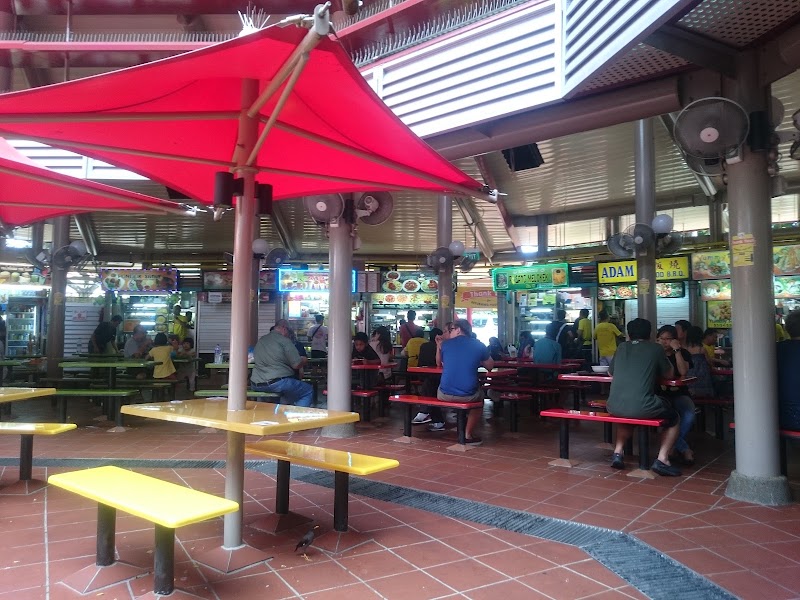
Adam Road Food Centre, on Adam Road near Bukit Timah, is a compact neighbourhood centre that has achieved a reputation far beyond its size on the strength of a single stall that is widely considered to produce Singapore's best nasi lemak. Adam Road Nasi Lemak at stall #01-02 serves coconut rice with a sambal that is caramelised, complex, and genuinely spicy: not the sweet, mild approximation of sambal that appears at tourist-facing stalls: alongside a fried chicken thigh whose skin achieves a genuine crunch, and the full accompaniments of fried anchovies, peanuts, egg, and cucumber. The queue at this stall begins before the centre opens and typically sells out by 10am on weekdays and earlier on weekends.
Beyond the nasi lemak anchor, Adam Road Food Centre is a well-maintained neighbourhood centre with strong mee siam, Malay grilled fish, and Indian rojak stalls that serve the surrounding Bukit Timah and Holland Road residential community. The centre is difficult to reach by MRT: the nearest station is Farrer Road or Botanic Gardens, each requiring a bus connection: but the nasi lemak alone justifies the journey for anyone who wants to understand why the dish commands the loyalty it does. Visiting before 9am on a weekday is the only reliable strategy for avoiding the queue and securing a full portion before the coconut rice sells out.
📍 Address: 2 Adam Rd, Singapore 289876
🕐 Hours: 7am–9pm daily (nasi lemak stall typically sells out by 10am)
9. Chomp Chomp Food Centre, Best Suburban Hawker
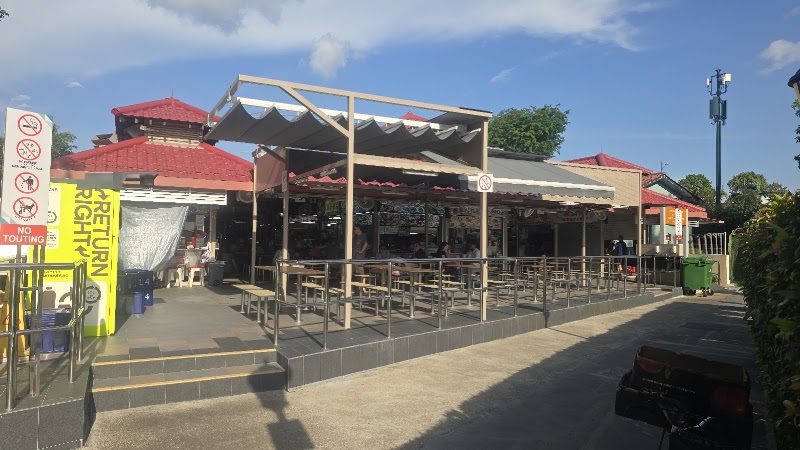
Chomp Chomp Food Centre, on Kensington Park Road in Serangoon Gardens, represents the suburban hawker centre at its best: a community food hub that serves the Serangoon Gardens estate and draws visitors from across the North-East corridor on the strength of dishes that are genuinely excellent rather than merely convenient. The centre operates primarily in the evening hours, transforming into a lively, open-air eating destination from around 6pm until midnight, with families, couples, and large groups occupying the outdoor tables under the night sky in a format that feels more social than the compact, functional daytime hawker centres of the CBD.
The centre's reputation rests primarily on its BBQ chicken wings: charcoal-grilled marinated wings that achieve a caramelised, slightly charred exterior with moist flesh inside, and which represent one of the best versions of this particular preparation in Singapore. The char kway teow stalls here produce a smoky, wok-hei-rich version that rivals the best in the city. The stingray, grilled on banana leaf and served with sambal and lime, is one of the better versions of this distinctively Singaporean BBQ dish available at any suburban centre. The overall atmosphere: outdoor, convivial, unhurried: is a specific Singapore evening experience that the indoor CBD centres cannot replicate, and the Serangoon Gardens location gives Chomp Chomp a neighbourhood character that tourist-facing centres have largely lost.
📍 Address: 20 Kensington Park Rd, Singapore 557269
🕐 Hours: 5pm–1am daily (some stalls from 12pm)
10. Newton Food Centre, Most Famous (Tourist)
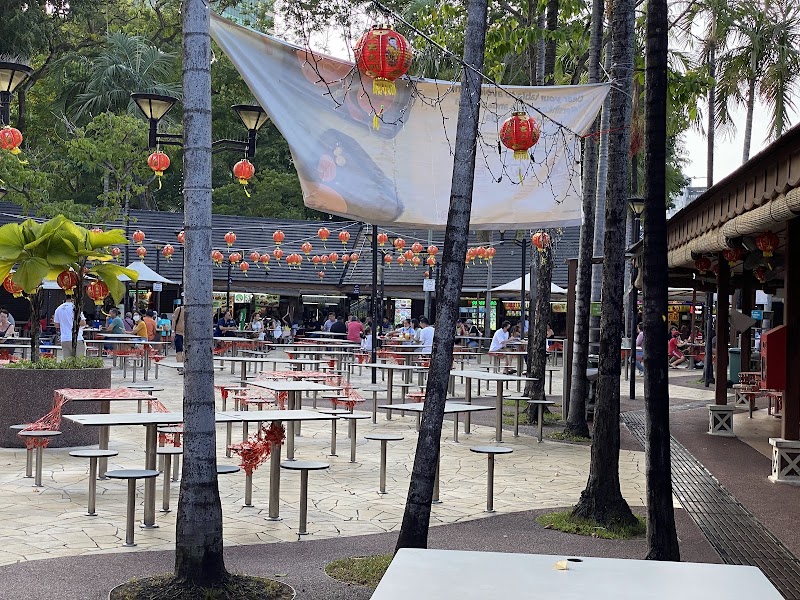
Newton Food Centre, at 500 Clemenceau Avenue North, is the most internationally recognisable hawker centre in Singapore: featured in Crazy Rich Asians, Anthony Bourdain's television work, and virtually every international travel guide published in the past two decades. It is also the centre on this list that we recommend with the most caveats. Newton is genuinely a functioning hawker centre with real stalls serving real hawker food; the satay, barbecue seafood, and Hokkien mee available here are legitimate preparations of their respective dishes. The problem is structural: Newton's international fame has created an economy of touting and aggressive pricing that has made it the least authentic hawker experience on this list.
Stall touts at Newton: vendors who actively approach visitors in the aisles to direct them to specific stalls: are more persistent here than at any other centre we visited, and the seafood pricing in particular reflects a tourist premium that can push a simple crab or prawn dish to two or three times the cost at equivalent stalls elsewhere. First-time visitors who do not know the price norms of Singapore hawker food are routinely overcharged in ways that would not occur at any other centre on this list. Newton ranks on this list because it is genuinely visited by large numbers of people and because the food, when ordered carefully from established non-seafood stalls at clearly posted prices, is reasonable value. Visitors who want barbecue seafood specifically should consider Chomp Chomp for a more honest version of the same experience at fairer prices.
📍 Address: 500 Clemenceau Ave N, Singapore 229495
🕐 Hours: 12pm–2am daily
How They Compare
| Hawker Centre | Rating | Best Dishes | Crowd Level | Opening Hours | Location |
|---|---|---|---|---|---|
| Old Airport Road Food Centre | 4.3 ★ | Char Kway Teow, Frog Porridge, Lor Mee | High (local) | 6am–midnight | Geylang |
| Chinatown Complex Food Centre | 4.2 ★ | Soya Sauce Chicken, Roast Meats | Very High | 6am–11pm | Chinatown |
| Tiong Bahru Market | 4.3 ★ | Chwee Kueh, Char Kway Teow, Carrot Cake | High | 6am–9pm | Tiong Bahru |
| Maxwell Food Centre | 4.2 ★ | Chicken Rice, Oyster Cake, Popiah | Very High (tourist) | 8am–10pm | Tanjong Pagar |
| Amoy Street Food Centre | 4.2 ★ | Prawn Noodle, Fishball Noodle, Wonton | High (weekday) | 7am–9pm | CBD |
| Lau Pa Sat | 4.1 ★ | Satay, Indian Dishes, Laksa | High (evening) | 24 hours | Raffles Quay |
| Geylang Serai Market | 4.1 ★ | Nasi Padang, Mee Rebus, Rendang | Medium–High | 6am–10pm | Geylang Serai |
| Adam Road Food Centre | 4.2 ★ | Nasi Lemak, Mee Siam, Rojak | High (morning) | 7am–9pm | Bukit Timah |
| Chomp Chomp Food Centre | 4.2 ★ | BBQ Wings, Char Kway Teow, Stingray | High (evening) | 5pm–1am | Serangoon Gardens |
| Newton Food Centre | 3.9 ★ | Satay, BBQ Seafood, Hokkien Mee | High (tourist) | 12pm–2am | Newton |
The 10 Hawker Dishes Every Visitor Must Try
Singapore hawker culture encompasses hundreds of dishes drawn from Chinese, Malay, Indian, Peranakan, and regional Southeast Asian cooking traditions. For visitors approaching the hawker centre for the first time, these ten dishes represent the core of the canon: each one worth seeking out at the best available preparation:
Chicken rice (Hainanese chicken rice) is Singapore's de facto national dish: poached or roast chicken served over fragrant rice cooked in chicken broth and fat, with chilli sauce, dark soy, and ginger paste. The best preparations are at Maxwell Food Centre. Price: SGD 4–6 per plate.
Char kway teow is flat rice noodles stir-fried at high heat in a wok over charcoal or gas, with eggs, beansprouts, Chinese sausage, cockles, and dark soy. Wok hei: the smoky, slightly charred fragrance of a properly heated wok: is the defining quality of a great preparation. Tiong Bahru Market and Old Airport Road Food Centre are the benchmarks. Price: SGD 4–7 per plate.
Laksa is a coconut milk-based noodle soup of Peranakan origin, with thick round noodles, prawns, cockles, fish cake, tofu puffs, and sambal. Katong laksa, the spoon-eaten variant from the East Singapore Peranakan community, is the most distinctive local development of the dish. Price: SGD 5–8 per bowl.
Chilli crab is Singapore's most internationally famous dish: whole mud crab cooked in a semi-thick tomato and egg-drop sauce seasoned with chilli, garlic, and fermented black beans. It is more accurately described as a restaurant dish than a hawker dish, though it appears at some hawker centres and seafood zi char stalls. Price: SGD 60–120 per crab at restaurants.
Satay are marinated meat skewers: chicken, beef, or mutton: grilled over charcoal and served with ketupat (compressed rice), cucumber, onion, and peanut sauce. Lau Pa Sat's Satay Street is the most atmospheric setting to eat them. Price: SGD 0.80–1.20 per skewer.
Nasi lemak is coconut-steamed rice served with sambal, fried anchovies, peanuts, cucumber, egg, and typically a protein: fried chicken, otah, or rendang. Adam Road Food Centre's nasi lemak stall is widely considered the island's best. Price: SGD 4–8 per set.
Bak chor mee is minced pork noodles in a dry or soup preparation with liver, braised mushrooms, vinegar, and chilli. The dry version, tossed with vinegar and dark soy, is the more distinctive preparation. Price: SGD 4–6 per bowl.
Oyster omelette (orh luak) is a preparation of egg, starch, and fresh oysters fried together in lard until the edges crisp while the centre retains a soft, almost custardy texture, served with a red chilli sauce. The best versions use plump fresh oysters and a properly seasoned starch mixture. Price: SGD 5–8 per plate.
Rojak is a sweet-savoury salad of fruits and vegetables: cucumber, pineapple, turnip, bean sprouts, and you tiao (dough fritters): tossed in a shrimp paste and palm sugar dressing. It is one of the most distinctively Singaporean preparations, with no close equivalent in any other cuisine. Price: SGD 4–6 per portion.
Kaya toast with soft-boiled eggs and kopi (local coffee) is the canonical Singapore breakfast: a ritual rather than merely a meal. Kaya is a jam made from coconut milk, eggs, and pandan, spread thickly on toasted bread with butter. The soft-boiled eggs are broken into a saucer, seasoned with dark soy and white pepper, and eaten alongside. Tiong Bahru Market's Ya Kun-adjacent stalls and the coffee shops within most hawker centres serve credible versions. Price: SGD 2–4 per set.
How to Navigate a Singapore Hawker Centre Like a Local
The ordering process at a hawker centre differs from a restaurant in every respect. There is no host, no menu presented to you, and no single bill. You find your own table, approach each stall individually, order and pay at the counter, and carry your food back yourself. Most stalls display their menu on a board above the counter; prices are fixed and are not negotiable. Pointing at the food in the display case or glass cabinet is entirely acceptable and often more efficient than attempting to describe the dish verbally if there is a language barrier.
Table reservation with tissue packs is one of Singapore's most distinctive social customs. Leaving a packet of tissue paper: or, more formally, an umbrella or bag: on the table marks it as claimed while you queue for food. This "chope" system is deeply embedded in local hawker culture and universally understood: a table with a tissue pack on it is occupied even if no person is present. Do not remove tissue packs from tables. The practice has been debated in Singapore for decades as a hygiene concern but shows no sign of declining.
Payment methods at hawker centres have evolved significantly in recent years. Most stalls accept PayNow, PayLah, and various QR-code payment systems, and many accept credit cards via a reader at the counter. Cash remains widely accepted and is the most reliable fallback. Prices at hawker centres are fixed: there is no service charge and no GST at hawker stall level, though the coffee shops and eating houses that adjoin some centres may levy a service charge. Tipping is not expected or customary at hawker stalls.
Peak hours at most hawker centres are 12pm–1:30pm for lunch and 7pm–8:30pm for dinner. Visiting just before these windows: arriving at 11:30am or 6:30pm: gives access to the full selection of stalls, fresher food, and shorter queues. Many stalls sell out of their best preparations during peak hours and switch to a more limited menu for the remainder of the session.
Want to be featured?
Get your business listed as a top pick and reach thousands of Singapore customers actively searching for your services.
Frequently Asked Questions
What is a hawker centre?
A hawker centre is an open-air or semi-enclosed food court that houses multiple independent food stalls under one roof, each operated by a different vendor who specialises in one or two dishes. Singapore's hawker centres evolved from the resettlement of street hawkers: itinerant food vendors: into purpose-built government-managed facilities in the 1960s and 1970s. Today there are over a hundred hawker centres across Singapore, each a community institution with its own character. In 2020, Singapore hawker culture was inscribed by UNESCO as an Intangible Cultural Heritage of Humanity.
What is the most famous hawker centre in Singapore?
Maxwell Food Centre in Tanjong Pagar is the most internationally famous hawker centre in Singapore, known primarily as the home of Tian Tian Hainanese Chicken Rice. However, Old Airport Road Food Centre in Geylang is widely considered by food professionals and local enthusiasts to be the best hawker centre in Singapore by food quality: it is less tourist-facing than Maxwell but holds the highest concentration of Michelin-recognised stalls and the most comprehensive range of high-quality hawker cooking on the island.
How much does hawker food cost?
Most hawker dishes in Singapore cost between SGD 3 and SGD 8 per portion. A complete meal of a main dish, a side, and a drink at a hawker centre typically costs between SGD 8 and SGD 15 per person: one of the most affordable meal costs among major world cities. Some premium preparations: whole crabs at seafood-focused stalls, for example: can cost significantly more, but these are the exception rather than the norm. Prices at tourist-facing centres like Newton and Lau Pa Sat may be slightly higher than at local neighbourhood centres.
Is Newton Food Centre worth visiting?
Newton Food Centre is a real hawker centre with real food, and it is not without merit: the satay at Newton is genuinely good, and the evening atmosphere at the open-air centre is pleasant. However, Newton has a well-documented history of aggressive touting and above-market pricing for seafood that makes it a less honest experience than any other major hawker centre in Singapore. Visitors who are aware of this and order carefully from non-seafood stalls at clearly posted prices can have a reasonable experience. Visitors who want barbecue seafood or satay in a more authentic setting at fairer prices should consider Chomp Chomp Food Centre in Serangoon Gardens instead.
Is hawker food safe to eat?
Yes. Singapore's hawker centres operate under a rigorous food safety and hygiene inspection regime administered by the Singapore Food Agency (SFA). All stalls are graded on a publicly displayed A–C rating system based on regular inspections; Grade A and Grade B stalls meet high hygiene standards. The resettlement of street hawkers into permanent facilities in the 1960s and 1970s was driven in part by the need to ensure food safety infrastructure: running water, refrigeration, and sanitation: that street cooking could not provide. Eating at any properly licensed Singapore hawker stall is safe by international standards.
Verdict
Old Airport Road Food Centre is, in 2026, the most complete expression of Singapore hawker culture available at a single location: the most Michelin-recognised stalls, the widest variety of cuisines, the most authentic local atmosphere, and a physical scale that allows for a serious eating session across multiple hawker disciplines. Chinatown Complex is the answer if you want the world's most famous hawker dish in its original location. Tiong Bahru Market connects the food to the deepest layers of Singapore's modernisation history. Maxwell is the right starting point for first-time visitors, and Amoy Street is where the city's best professional lunchers go. Lau Pa Sat at night, with satay smoke rising under Victorian ironwork and the CBD towers lit above, is a specific Singapore experience worth having regardless of where else you eat. Singapore hawker culture earned its UNESCO recognition. The best hawker centres deserve your time and attention in full.